Long-term cigarette smoking repeatedly exposes the body to nicotine and thousands of chemicals found in tobacco and cigarette smoke.
Nicotine plays an important role because it is highly addictive and can sustain continued tobacco use. But nicotine itself should not be confused with all of the health effects caused by cigarette smoking.
According to the U.S. Food and Drug Administration (FDA), cigarette smoke contains thousands of chemicals, and exposure to this complex chemical mixture contributes to serious diseases including cancer, cardiovascular disease and chronic obstructive pulmonary disease (COPD).
Understanding this distinction helps explain why long-term smoking is harmful, why nicotine dependence can make stopping difficult, and why cigarettes should not be treated as equivalent to every other nicotine-containing product.
What Does Long-Term Smoking Mean?
There is no single number of cigarettes or years that creates a universal definition of “long-term smoking.”
Smoking-related risk depends on multiple factors, including:
- how long a person has smoked;
- how frequently they smoke;
- the amount smoked;
- age at initiation;
- individual health factors; and
- exposure to other harmful substances.
What is clear is that repeated cigarette smoking creates repeated exposure to chemicals contained in tobacco and generated during combustion.
The longer smoking continues, the longer this exposure continues.
Why Is Cigarette Smoking Harmful?
A conventional cigarette burns tobacco.
When the cigarette is lit, combustion creates smoke containing a complex mixture of chemicals.
Some chemicals already exist in the tobacco plant.
Others can form during tobacco processing.
Additional chemicals are created when the cigarette burns.
This means cigarette smoking involves much more than nicotine exposure.
The basic relationship is:
Cigarette
→ tobacco
→ combustion
→ smoke
→ nicotine + thousands of other chemicals
Nicotine is strongly associated with addiction, while the broader mixture of chemicals in tobacco and tobacco smoke contributes substantially to smoking-related disease.
What Does Nicotine Have to Do With Long-Term Smoking?
Nicotine is a highly addictive chemical naturally present in tobacco.
When nicotine is repeatedly delivered to the brain, it can lead to dependence.
Dependence can result in:
- cravings;
- repeated use;
- difficulty stopping; and
- withdrawal symptoms when nicotine use stops.
This creates an important relationship between nicotine and long-term cigarette exposure.
Nicotine is not responsible for every disease caused by cigarette smoking, but nicotine dependence can keep people smoking.
Continued smoking then results in continued exposure to the harmful chemicals contained in cigarette smoke.
A useful way to understand this is:
Nicotine → addiction and continued use
Continued cigarette smoking → repeated smoke exposure
These are connected but different issues.
How Does Long-Term Smoking Affect the Lungs?
The respiratory system is directly exposed to cigarette smoke.
Long-term smoking is strongly associated with serious respiratory diseases, including chronic obstructive pulmonary disease.
COPD is a group of conditions that restrict airflow and make breathing increasingly difficult.
Smoking is also a major cause of lung cancer.
Repeated exposure to cigarette smoke can damage lung tissue and interfere with normal respiratory function.
The health effects are not limited to the lungs.
How Does Smoking Affect the Cardiovascular System?
Cigarette smoking is also associated with cardiovascular disease.
Chemicals in cigarette smoke can affect the heart and blood vessels.
Long-term smoking increases the risk of conditions including coronary heart disease and stroke.
This is another reason why cigarette smoking should not be discussed only in terms of nicotine.
The cardiovascular effects of smoking involve exposure to the broader chemical mixture produced by cigarette use.
Smoking and Cancer
Cigarette smoking is associated with multiple types of cancer.
Lung cancer is the most widely recognized example, but smoking can affect many parts of the body.
Carcinogenic chemicals can originate from tobacco itself, tobacco processing and the combustion process.
When cigarette smoke is inhaled repeatedly over time, exposure to these substances continues.
This is one of the major differences between discussing nicotine dependence and discussing the health effects of cigarette smoking.
They overlap, but they are not identical concepts.
Is Nicotine the Main Cause of Smoking-Related Disease?
Nicotine is primarily associated with addiction.
It is the chemical that helps sustain repeated tobacco use and makes stopping difficult for many users.
However, FDA guidance distinguishes nicotine addiction from the broader health effects caused by the chemical mixture in tobacco and tobacco smoke.
This distinction matters because people sometimes assume:
Nicotine = cigarette smoke
That is incorrect.
Nicotine is one chemical.
Cigarette smoke is a complex mixture containing thousands of chemicals.
Therefore, the health effects of cigarette smoking cannot be understood simply by looking at nicotine content.
Is Nicotine Harmless?
No.
The fact that nicotine is not responsible for all smoking-related disease does not mean nicotine is harmless.
Nicotine is highly addictive.
It is particularly concerning for young people because the brain continues developing during adolescence and young adulthood.
Nicotine exposure during pregnancy is also a health concern.
Adults who do not currently use nicotine or tobacco products should not start using them.
Does Smoking Less Eliminate the Risks?
Reducing the number of cigarettes smoked does not make cigarette smoking risk-free.
Even relatively low levels of smoking can still expose users to harmful chemicals.
For people who currently smoke, completely quitting cigarette smoking provides substantially greater health benefits than simply continuing to smoke fewer cigarettes.
People who want to stop smoking can speak with a healthcare professional about evidence-based cessation options.
What Happens When Someone Stops Smoking?
Stopping cigarette smoking ends ongoing exposure to cigarette smoke.
Health benefits can begin after smoking stops and continue over time.
The exact recovery process varies by individual and depends on factors such as smoking history, existing health conditions and age.
Importantly, people do not need to wait until they have smoked for a certain number of years before quitting becomes worthwhile.
Stopping smoking provides health benefits regardless of how long a person has smoked.
What Are Evidence-Based Ways to Quit Smoking?
For adults who want to quit cigarette smoking, evidence-based treatments are available.
In the United States, FDA-approved options include nicotine replacement therapies and certain prescription medications.
Nicotine replacement therapy, commonly called NRT, can include:
- nicotine patches;
- nicotine gum; and
- nicotine lozenges.
These products are specifically designed and regulated for smoking cessation.
Prescription smoking-cessation medications are also available.
A healthcare professional can help determine which approach may be appropriate for an individual.
This distinction is important because ordinary consumer nicotine products should not automatically be described as smoking-cessation treatments.
Are Vapes Smoking-Cessation Medicines?
E-cigarettes and consumer vaping products should not automatically be classified as nicotine replacement therapies.
In the United States, e-cigarettes are not FDA-approved smoking-cessation medicines.
They belong to a different product category from FDA-approved nicotine patches, gums, lozenges and approved prescription cessation medications.
Claims that a consumer vaping product can “treat nicotine addiction” or is an “NRT” should therefore not be made without appropriate regulatory authorization.
What About Heat-Not-Burn Products?
Heat-not-burn products use a different operating mechanism from conventional cigarettes.
A traditional cigarette burns tobacco.
A heat-not-burn or heated-stick system uses compatible hardware to heat a solid consumable.
This difference in product mechanics should be described accurately, but it should not automatically be converted into a universal health claim.
Different heated products can use different materials and formulations.
Some heated products contain tobacco.
Some heated-stick products use tobacco-free materials.
Some contain nicotine.
Others are nicotine-free.
Product composition must therefore be evaluated individually.
Heated Tobacco Products vs. Tobacco-Free Heated Sticks
This distinction is especially important.
Heated Tobacco Products
Heated tobacco products use tobacco-containing consumables.
Tobacco-Free Heated Sticks
These use a tobacco-free material as the heated consumable.
Tobacco content and nicotine content are also separate characteristics.
A tobacco-free heated stick may still contain nicotine.
Another tobacco-free heated stick may contain no nicotine.
Therefore:
Tobacco-free does not automatically mean nicotine-free.
Where Does NEAFS Fit?
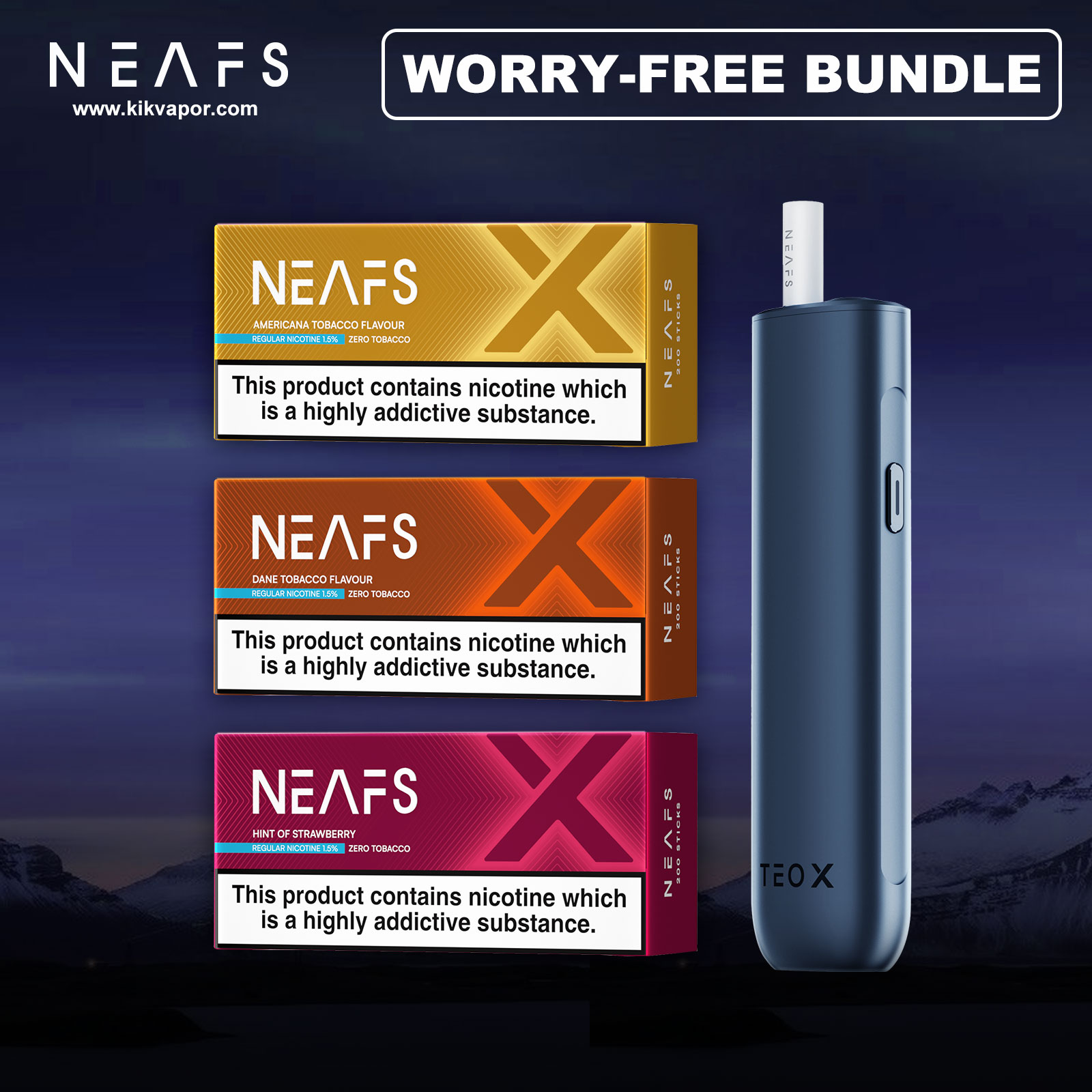
NEAFS is associated with heated-stick products and compatible heating hardware.
Within the current NEAFS ecosystem, different product lines should be evaluated according to their individual specifications rather than treated as identical.
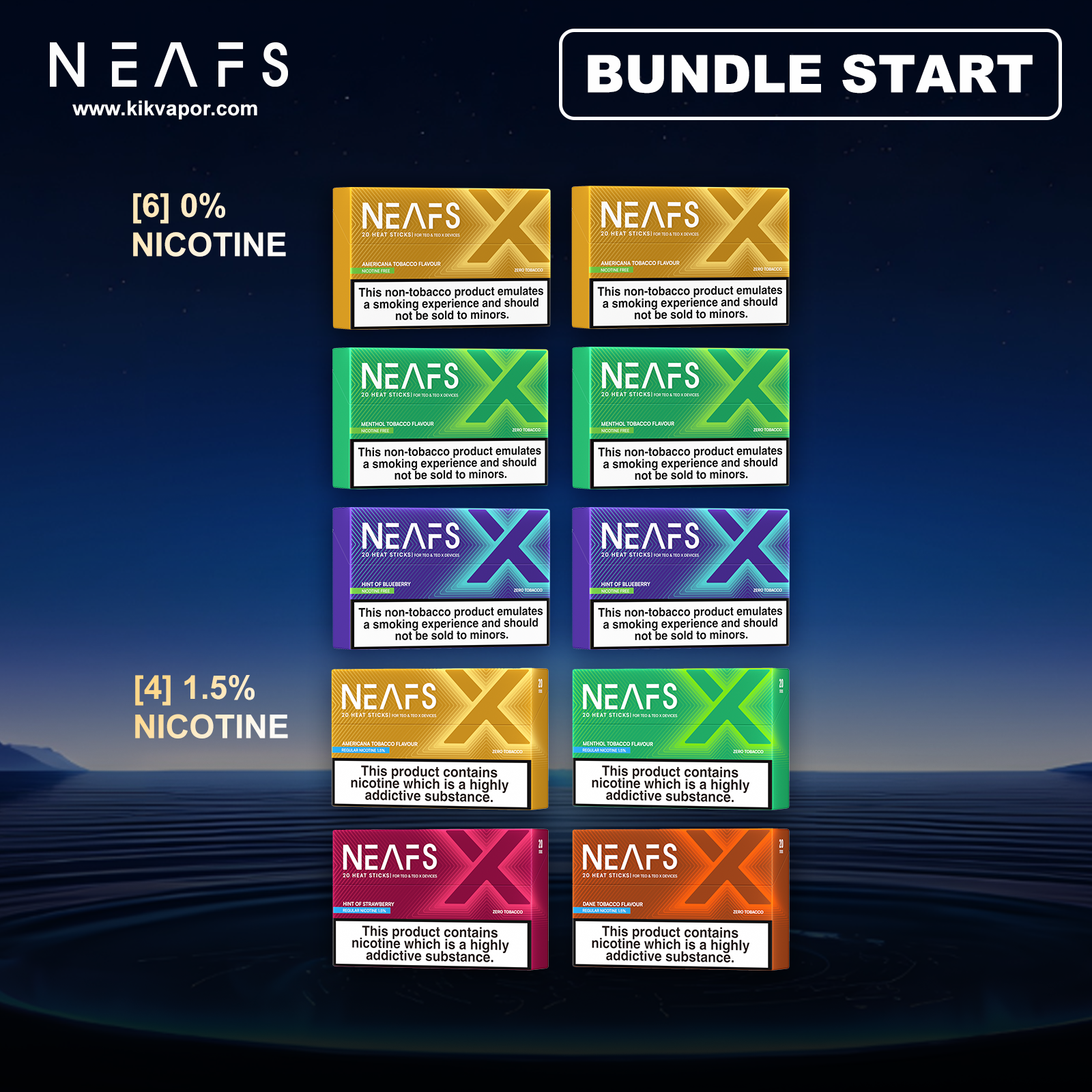
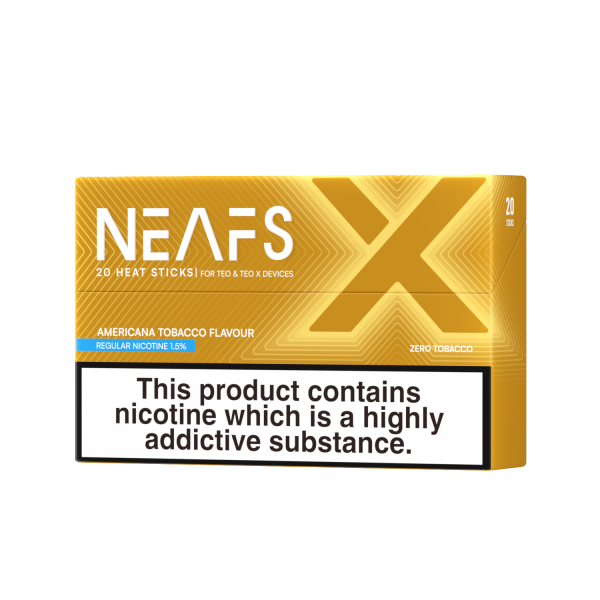
For example, current NEAFS-X products include tobacco-free heated-stick options with different nicotine specifications:
NEAFS-X 1.5%
Tobacco-free and nicotine-containing.
NEAFS-X 0%
Tobacco-free and nicotine-free.
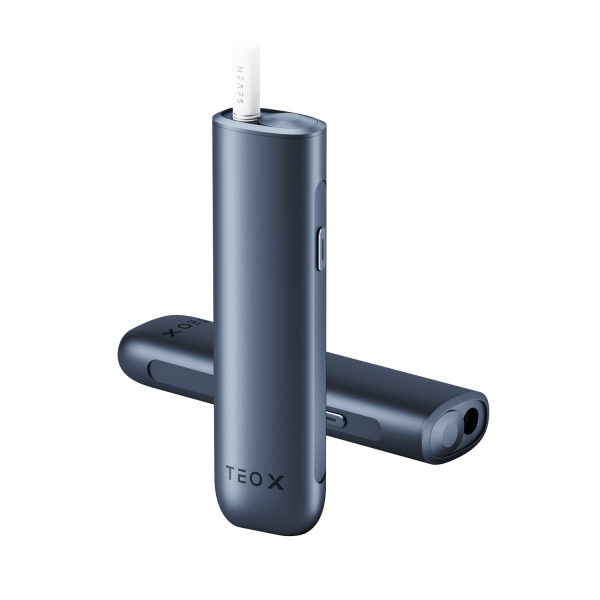
TEO and TEO-X, meanwhile, are heating devices rather than consumables.
This creates a straightforward product relationship:
NEAFS Ecosystem
→ TEO / TEO-X = heating hardware
→ NEAFS / NEAFS-X = heated-stick product lines
This describes the product structure.
It does not mean NEAFS products should be presented as treatments for smoking-related disease or as approved smoking-cessation products.
Can NEAFS Be Described as a Smoking-Cessation Product?
NEAFS should not automatically be described as a smoking-cessation treatment, nicotine replacement therapy or medical product.
These are specific regulatory categories.
FDA-approved smoking-cessation treatments have been evaluated specifically for that purpose.
A heated-stick product should therefore not be marketed using claims such as:
- “helps you quit smoking”;
- “repairs smoking damage”;
- “prevents smoking-related disease”;
- “nicotine replacement therapy”; or
- “smoking-cessation treatment”
unless the specific product has appropriate authorization for such claims.
NEAFS product information should instead focus on verifiable characteristics such as product format, composition, nicotine content and device compatibility.
Cigarettes vs. Heated Sticks: Understanding the Difference
The most useful comparison focuses on product characteristics rather than unsupported health claims.
| Feature | Traditional Cigarettes | Heated-Stick Systems |
|---|---|---|
| Basic mechanism | Burns a cigarette | Heats a solid consumable |
| Combustion | Yes | Designed for electronic heating |
| Smoke | Produced through combustion | Different aerosol/emission format |
| Separate hardware | No | Usually required |
| Tobacco | Yes | Depends on product |
| Nicotine | Typically present | Depends on product |
| Compatibility | Not applicable | Device compatibility matters |
This table explains how the products differ mechanically.
It should not be interpreted as a medical risk ranking.
Why “Safer” and “Less Harmful” Claims Need Context
Tobacco and nicotine products should not be compared using unsupported universal claims such as:
“90% safer”
“95% less harmful”
“healthy smoking”
or:
“risk-free alternative.”
Health evidence is product-specific.
Regulatory findings relating to one particular product cannot automatically be applied to another product or to an entire product category.
In the United States, FDA modified-risk orders apply to specific products that have undergone regulatory review.
A finding concerning one authorized product does not establish the same claim for NEAFS or for all heated-stick products.
What Should Adult Consumers Compare Instead?
Rather than relying on broad health claims, compare verifiable product attributes.
Useful questions include:
- Does the product involve combustion?
- Does the consumable contain tobacco?
- Does it contain nicotine?
- What nicotine strength is stated?
- Is a separate device required?
- Which devices are compatible?
- What ingredients or base materials are disclosed?
- Is the product intended or approved for smoking cessation?
These questions provide more useful information than vague marketing language.
Frequently Asked Questions
What are the health effects of long-term cigarette smoking?
Long-term cigarette smoking is associated with serious diseases including cancer, cardiovascular disease and chronic respiratory disease. Cigarette smoke exposes users to thousands of chemicals.
Is nicotine responsible for all smoking-related disease?
No. Nicotine is highly addictive and helps sustain tobacco use, but many serious smoking-related diseases are caused by exposure to the broader mixture of chemicals in tobacco and cigarette smoke.
Why is nicotine important if cigarette smoke causes much of the harm?
Nicotine can create and sustain dependence. Continued nicotine dependence can keep a person smoking, resulting in repeated exposure to cigarette smoke.
Is smoking fewer cigarettes safe?
No amount of cigarette smoking should be considered risk-free. Completely quitting smoking provides greater health benefits than continuing to smoke.
Are heated sticks cigarettes?
No. Heated sticks are solid consumables designed for compatible heating devices rather than conventional cigarettes designed to be lit directly.
Do all heated sticks contain tobacco?
No. Some contain tobacco, while others use tobacco-free materials.
Does tobacco-free mean nicotine-free?
No. Tobacco and nicotine are separate attributes. A tobacco-free product may still contain nicotine.
Is NEAFS an NRT product?
NEAFS should not be described as nicotine replacement therapy unless a specific product has the regulatory authorization required for that purpose.
Does NEAFS cure or reverse damage caused by smoking?
NEAFS should not be presented as a treatment for smoking-related disease or as a product that repairs damage caused by smoking.
What should someone do if they want to quit smoking?
People who want to quit smoking can speak with a healthcare professional about evidence-based cessation treatments, including FDA-approved nicotine replacement therapies and prescription medications where appropriate.
The Bottom Line
Long-term cigarette smoking is harmful because it repeatedly exposes the body to a complex mixture of chemicals in tobacco and cigarette smoke.
Nicotine plays a different but closely connected role.
It is highly addictive and can sustain continued tobacco use, which in turn prolongs exposure to cigarette smoke.
Understanding that distinction helps separate several concepts that are often incorrectly mixed together:
Nicotine ≠ cigarette smoke
Nicotine addiction ≠ all smoking-related disease
Heated sticks ≠ cigarettes
Tobacco-free ≠ nicotine-free
Consumer heated products ≠ approved smoking-cessation treatments
For people who currently smoke cigarettes, completely quitting smoking provides important health benefits. Evidence-based cessation treatments are available, and healthcare professionals can provide guidance appropriate to an individual’s circumstances.
Sources
- U.S. Food and Drug Administration (FDA), Nicotine Is Why Tobacco Products Are Addictive
- U.S. Food and Drug Administration (FDA), Chemicals in Tobacco Products and Your Health
- U.S. Food and Drug Administration (FDA), The Relative Risks of Tobacco Products
- U.S. Centers for Disease Control and Prevention (CDC), information on cigarette smoking and tobacco use